
What is LSAW Steel Pipe?
LSAW pipe is manufactured by bending and welding wide steel plates. The "Longitudinal" aspect refers to the weld seam running straight down the length of the pipe. While both UOE and JCOE utilize Submerged Arc Welding (SAW) and Mechanical Expansion (E), the way the steel plate is formed into a cylinder differs significantly.
1. The UOE Process: High-Speed Precision
The UOE process is designed for high-volume, standardized production. It is the preferred method for long-distance pipeline projects that require thousands of tons of uniform pipe.
The Production Steps:
Plate Pretreatment: Steel plates are flattened, edge-milled, and pre-bent.
U-ing: A massive hydraulic press bends the plate into a "U" shape.
O-ing: An even more powerful "O-press" closes the U-shape into a circular "O" tube.
Welding: Advanced gas-shielded pre-welding is followed by internal and external submerged arc welding.
Expansion (E): Mechanical expansion is performed to eliminate ovality and residual stress, ensuring a perfect diameter.
Key Feature: UOE is known for its high production efficiency. It is the fastest way to produce large-diameter, thick-walled pipes in bulk.
2. The JCOE Process: The Flexible Heavyweight
The JCOE process is a "step-by-step" forming method. It is highly valued for its versatility and its ability to handle extremely thick steel plates that UOE machines might struggle with.
The Production Steps:
Plate Pretreatment: Leveling and edge preparation of the steel plate.
J-C-O Bending: A hydraulic press bends the plate into a "J" shape, then the other side into a "C" (forming an open tube), and finally into a closed "O" shape.
Welding: Similar to UOE, this involves high-precision pre-welding followed by internal/external submerged arc welding.
Expansion (E): Mechanical expansion to reach final dimensional accuracy and relieve internal stress.
Key Feature: JCOE is highly flexible. While slower than UOE, it can produce a wider variety of pipe diameters and wall thicknesses on the same production line.
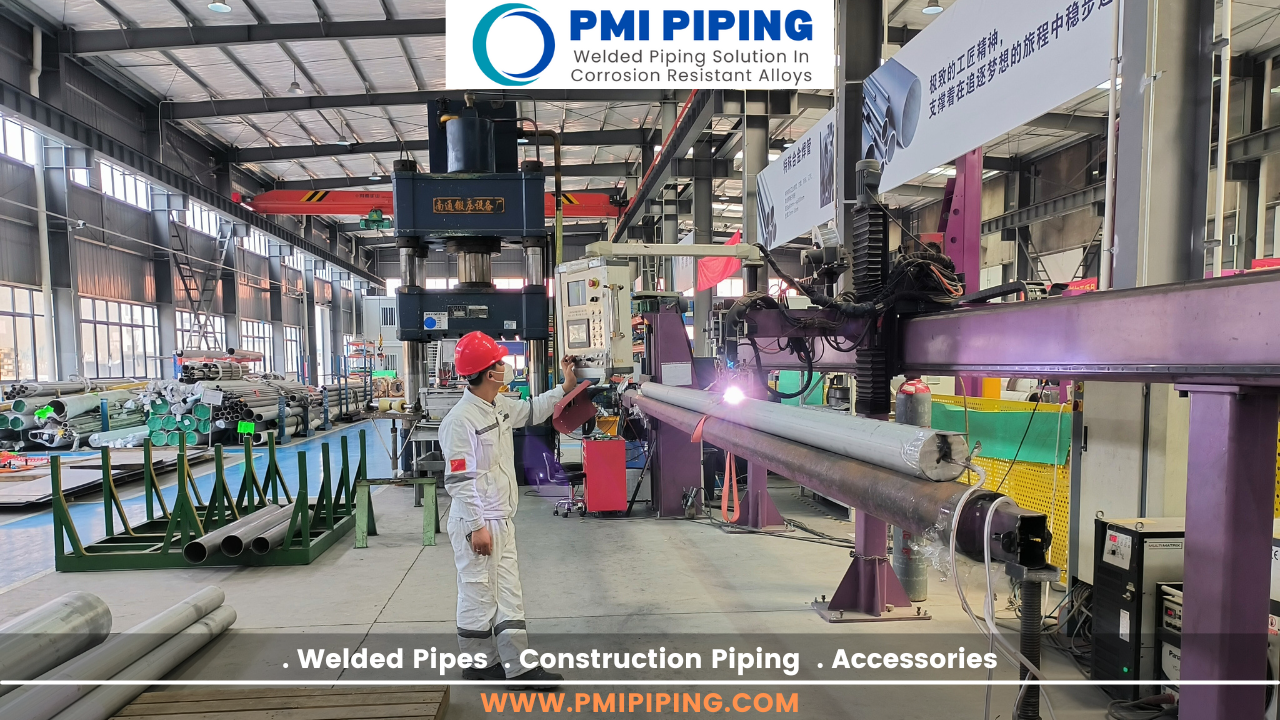
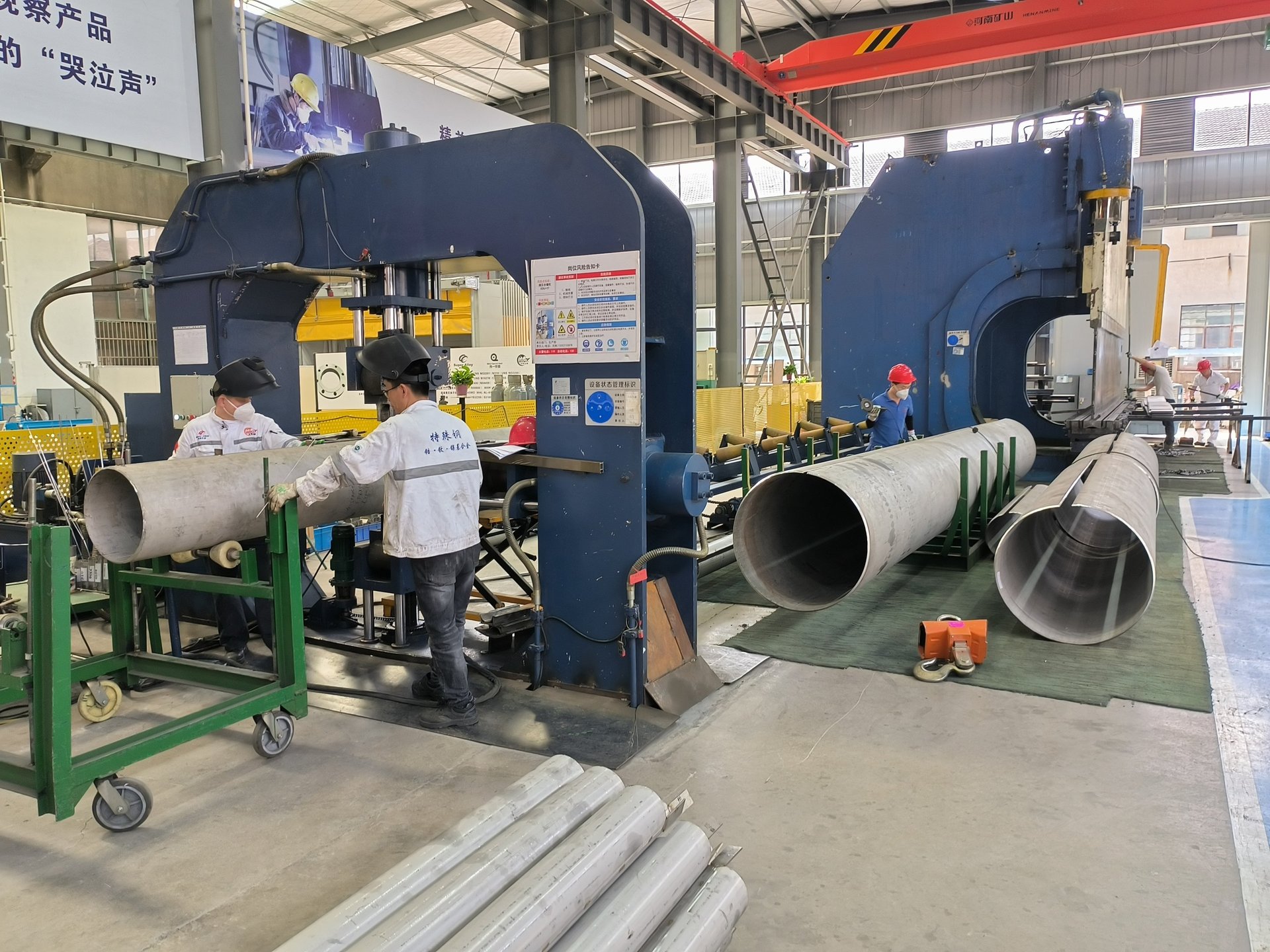
Which Process Do You Need?
Choosing between UOE and JCOE depends on your project’s scale and technical specifications:
Choose UOE if you have a massive project requiring high-speed delivery of standardized pipes.
Choose JCOE if your project requires specialized, heavy-walled pipes or a variety of different diameters in smaller batches.
At PMI Piping, we provide high-quality LSAW solutions tailored to your specific engineering requirements. Whether you need the volume of UOE or the precision of JCOE, our team ensures every pipe meets the highest international standards (API, ASTM, ISO).
Looking for high-performance LSAW pipes?
Visit our product catalog at www.pmipiping.com or contact our technical team at sales@pmipiping.com today for a custom quote.
PMI Piping stands as a prominent China manufacturer specializing in the design and production of welded piping fabricated in corrosion-resistant alloys. We serviced industry cover petroleum, chemical, metallurgy, environmental protection, marine engineering, environmental engineering, new energy, energy storage, and pharmaceutical equipment.
Email : sales@pmipiping.com
Mobile: + 86 139 2823 4834
© 2025. PMI PIPING . All rights reserved.
Contact
NO.18,Xinye 4 Road, Shunde Distric, Foshan City,Guangdong P.R. China, 528300
Phone : + 86 757 2639 1388